
By Lucinda Gosling. Images courtesy of Mary Evans Picture Library (unless otherwise stated)
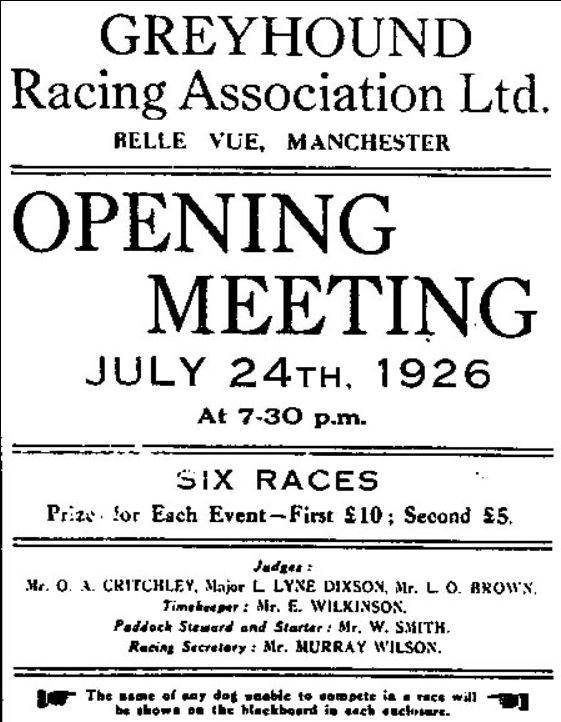
A century ago, on 24th July 1926, greyhound racing came to Britain. The location for its debut was Manchester, specifically Belle Vue, a site east of the city centre where zoological gardens and later, an amusement park, had entertained Mancunians since the Victorian era. The Manchester Guardian, reporting on the addition of this novelty to the city’s ‘odd collection of diversions’ assumed that “a large part of the crowd had come purely out of curiosity and had no real interest in the sport.” What they witnessed was a thrilling spectacle, with the racing described poetically by the Guardian’s reporter, who was bowled over by, “the gracefulness of the lithe, clean-cut figures, each thrusting forward after the quarry, one arrowy head passing and surpassing another in faithful, outstretched pursuit”.
It was a Canadian-born cement magnate, Brigadier-General Alfred Cecil Critchley (1890-1963), who first introduced greyhound racing as we know it to this country. Hare coursing, using greyhounds or ‘long dogs’, went as far back as the Elizabethan era. There had been an attempt to try racing greyhounds using a mechanical hare as bait at Hendon in 1876, and subsequent efforts to establish tracks periodically through the nineteenth century. Whippet racing was popular in northern regions, including Manchester. But it was Critchley’s vision, ambition, connections and business nous that was to turn track-based greyhound racing with a mechanical hare into a national obsession. After a conversation at a country house party, Critchley went into partnership with Charles Munn, an American who had witnessed the excitement generated by greyhound racing in his native country, and the sport’s potential to be commercially lucrative. Together they formed the National Greyhound Racing Association (NGRA) and set about raising funds. The first crowd at Belle Vue numbered 1700 but before long, over 20,000 spectators began to fill the stands, and the NGRA set its sights on more venues as part of a rapid expansion plan.
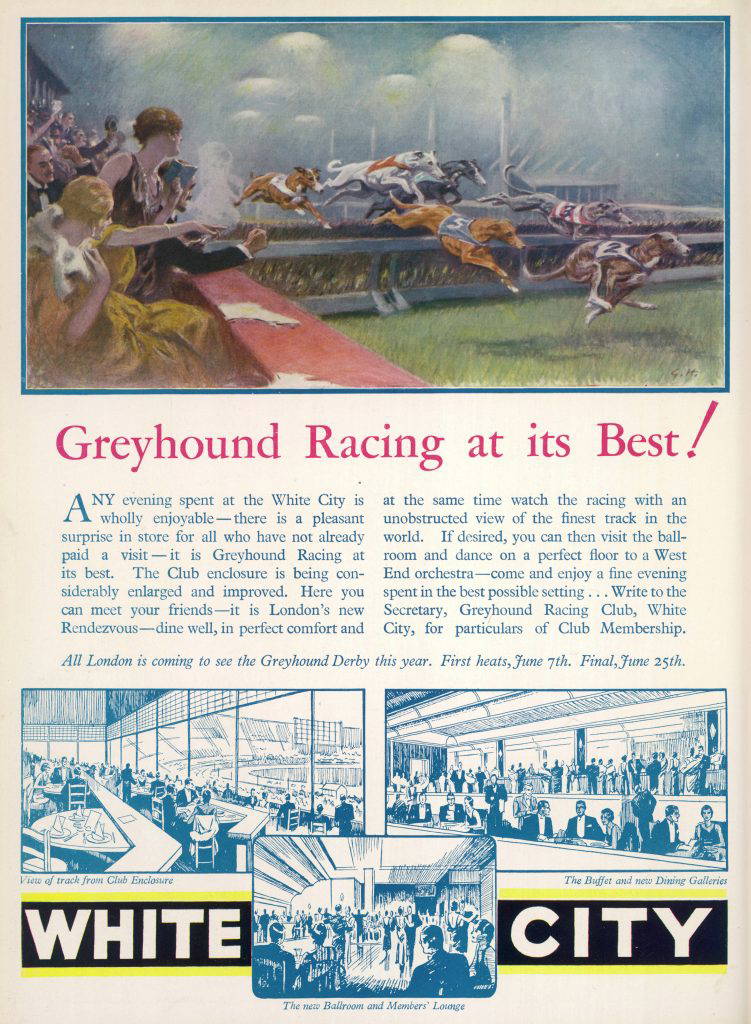
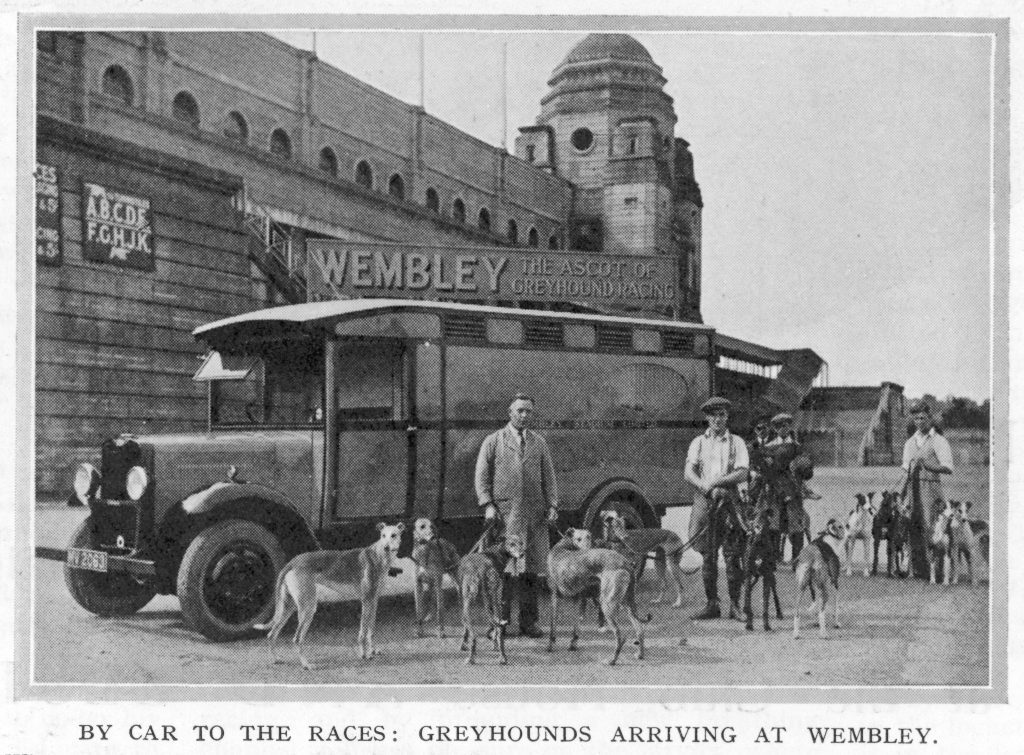
On 2 April 1927, the Daily Mail reported the organisation had signed a five-year lease of the White City stadium in west London, which was due to open a fortnight before another site over in north London – Harringay. It was expected that White City would have a capacity of 80,000, Harringay 40,000. Other stadia, in Liverpool, Birmingham, Leeds, Bristol, Belfast and Dublin, were all scheduled to open over Easter and Whitsuntide that year. Greyhound racing was spreading throughout the British Isles almost as fast as a greyhound streaking around a 440-yard track. On 10th December, the first public greyhound race took place at Wembley Stadium. “A little while ago, one might have said at Wembley was going to the dogs,” quipped the Guardian, “now the dogs were going to Wembley.” It added of greyhound racing’s remarkable trajectory: “We believe quite firmly that greyhound racing has come to stay. It has taken a great hold of the popular imagination. It is going quite definitely to take its place as one of our great democratic sports.” Its prediction was correct. During the inter-war years, greyhound racing became Britain’s third most popular form of entertainment, surpassed only by football and cinema. By the end of 1927, 2.2 million people were going to watch greyhound racing annually. Two years later, that figure had risen to 16 million. In 1928 alone, 154 tracks were registered. Not all of them came to fruition but such statistics suggest an insatiable appetite for the sport.
Wembley’s conversion from neglected site of the 1924 British Empire Exhibition to state-of-the-art greyhound racing stadium deserves particular attention. The logistics of packing immense crowds into the venue was solved by multi-transport options. On the ground formerly occupied by the Australian pavilion, a twenty-acre car park initially provided space for around 1000 cars though this was later expanded as car ownership continued to increase. There were special drop-off and parking areas for charabancs, and more frequent train services were scheduled on race nights, with walkways funnelling spectators from station to stands.
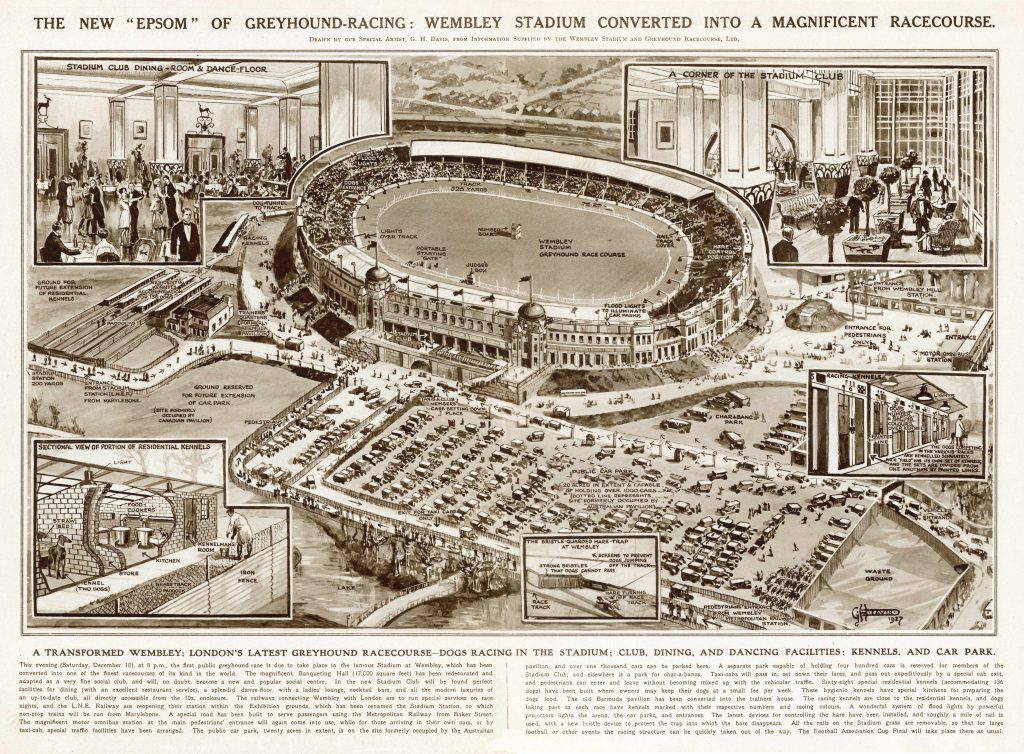
Meanwhile, the former Bermuda pavilion became the trainers’ house, while 68 residential kennels provided accommodation for 136 dogs. Floodlights meant that a night at the dogs was possible even in the depths of winter, and an agreement was struck so that the FA Cup Final could be played at Wembley; the railings around the track were simply removed to accommodate this. The sport, which was a seductive prospect with its American origins and modern connotations, proved to be an exhilarating night out. Dogs, led by keepers in white coats and bowler hats, were paraded in their coloured jackets before racing, and musical bands would add to the carnival atmosphere. Prior to each race, a hush would descend as all eyes turned to the floodlit track, and then, as the dogs were released and sprinted around the track, a cacophony of shouting and cheering for around thirty seconds until it was all over and those who had placed bets, counted winnings and losses until the next race.
But could anything beat the fleet-footed greyhound? In December 1937, the crowd at Romford stadium found out when tennis player, explorer and all-round sportsman Kenneth Gandar-Dower brought his twelve racing cheetahs from Africa. Able to accelerate from 0-50mph in two seconds they ‘left the dogs almost standing,’ reported the Illustrated Sporting and Dramatic News. But quickly bored if unable to catch their quarry, cheetahs lacked the consistent enthusiasm of greyhounds and their racing was a novel but brief episode in the history of the sport.
Greyhound racing’s latter-day image as a dying sport, of flat caps, warm beer, crumpled betting slips and basket meals, is a far cry from the lofty ambitions of the new stadium at Wembley in 1927. Investors in the NGRA numbered members of the aristocracy, successful businessmen and professional types, and the larger stadiums ensured there were top class facilities available for wealthy patrons. At Wembley, the Stadium Club, which had an annual membership fee of three guineas, boasted an enormous 15,000 square foot dining room capable of serving a thousand customers in one evening. There was a splendid dance floor, a ladies’ lounge, cocktail bars, “and all the modern luxuries of an up-to-date club” according to the Illustrated London News, which devoted a double page spread to a detailed diagrammatic illustration by its artist G.H. Davis. It was built by Sir Owen Williams, also responsible for Clapton stadium in 1928, with themed interior design by architect Maxwell Ayrton, carried out by artist and designer, George Sheringham. The Sphere magazine declared, “The ubiquity of the Long Dog is a characteristic feature of the decoration” when it published photographs showing the greyhound motif added to octagonal chair backs, and screen fretwork in the club’s dining room and Orangery lounge.
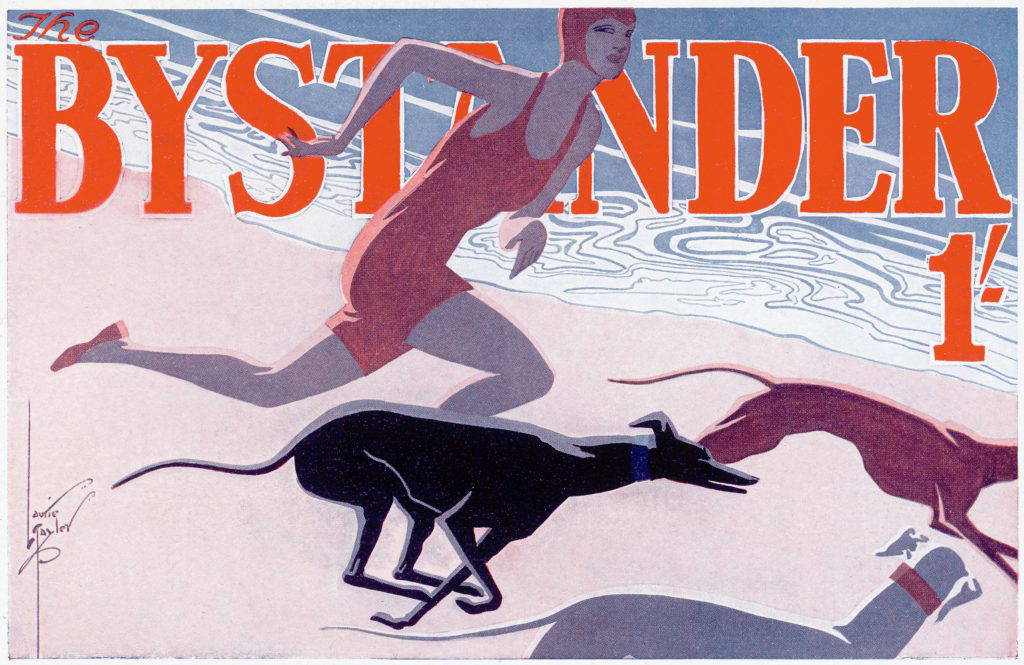
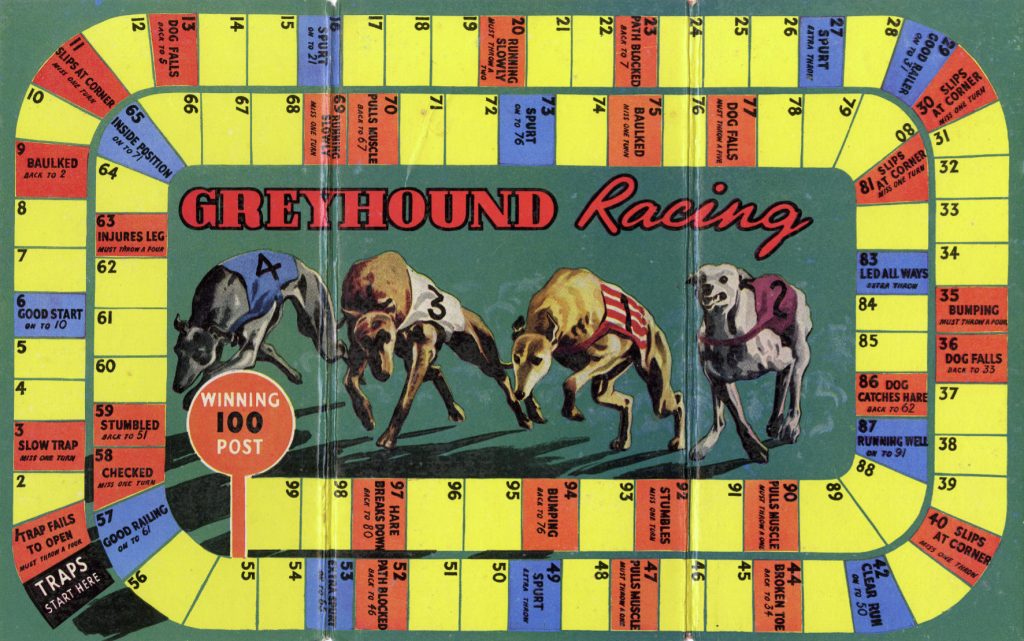
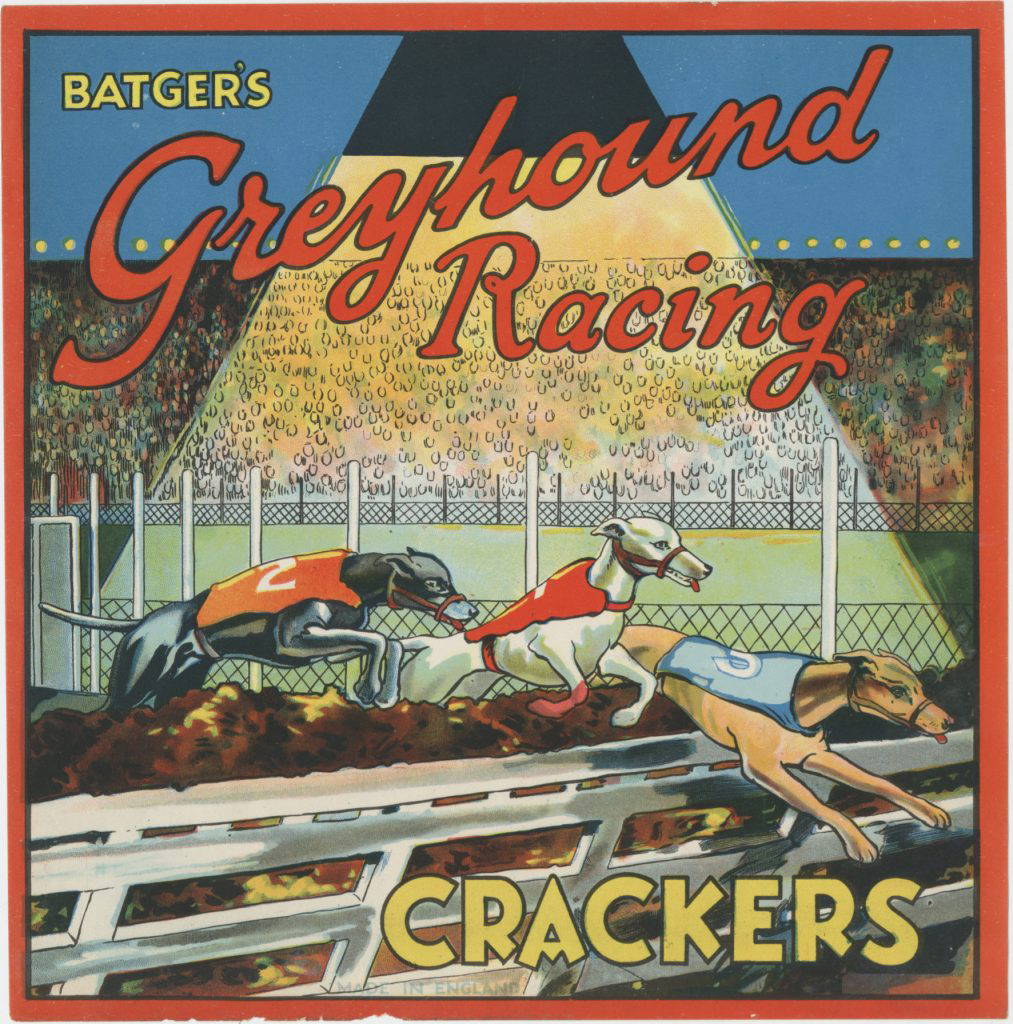
The greyhound, with its elegant, sleek silhouette, soon became a fashionable emblem of the period. It inspired artists, illustrators and sculptors from Armand Lémo to Erté, while greyhound racing permeated all areas of cultural life. There were greyhound racing board games, Christmas crackers, London Transport posters, playing cards, cartoons and songs. Author, humourist, and politician A. P. Herbert was an enthusiast, and immortalised the sport and its universal appeal when he wrote jokingly, “Don’t let’s go to the dogs tonight for mother will be there.” It was a sentiment echoed in the 1927 song, “Everybody’s Going to the Dogs” sung by Fred Douglas:
Milkman, postman,
Butcher, the baker,
Income tax man and the undertaker.
After a hard day’s work, I tell you where they all go now,
Everybody’s going to the dogs, bow wow.
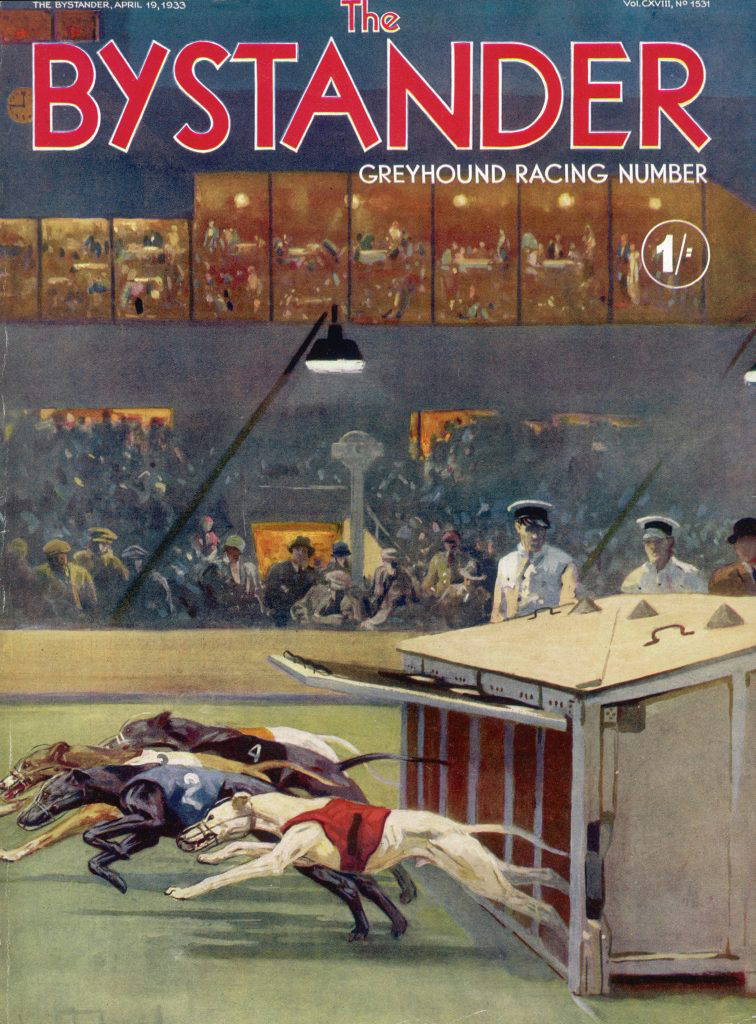
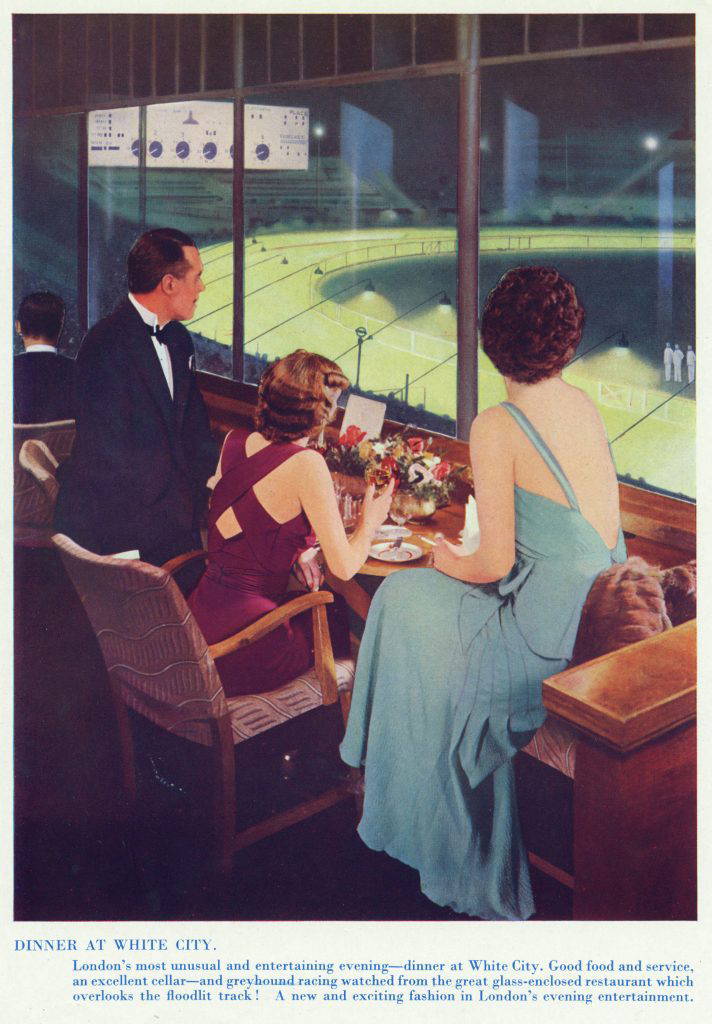
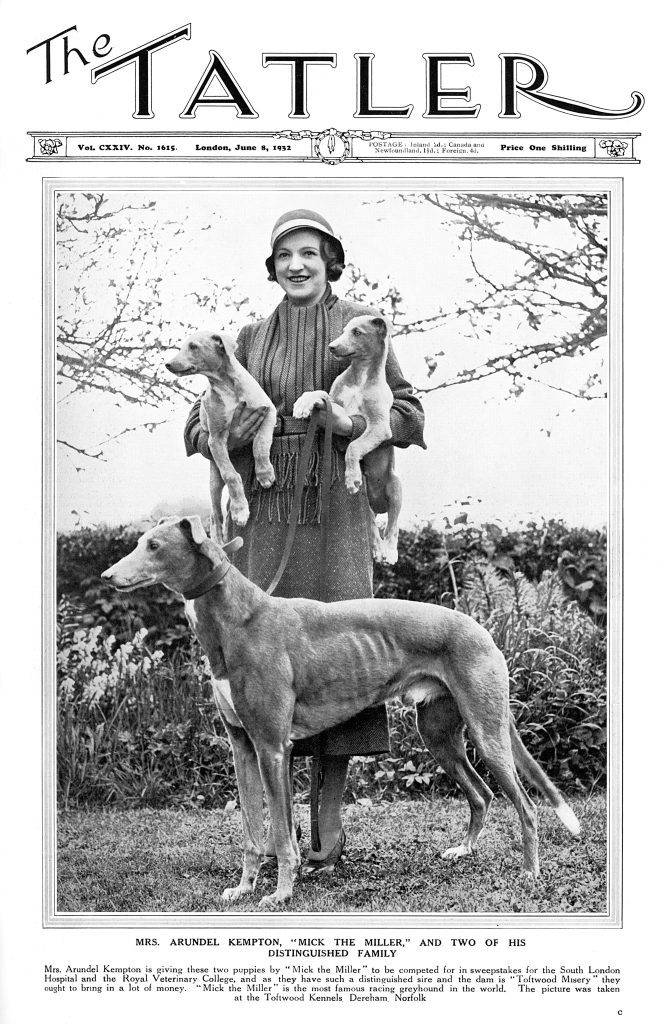
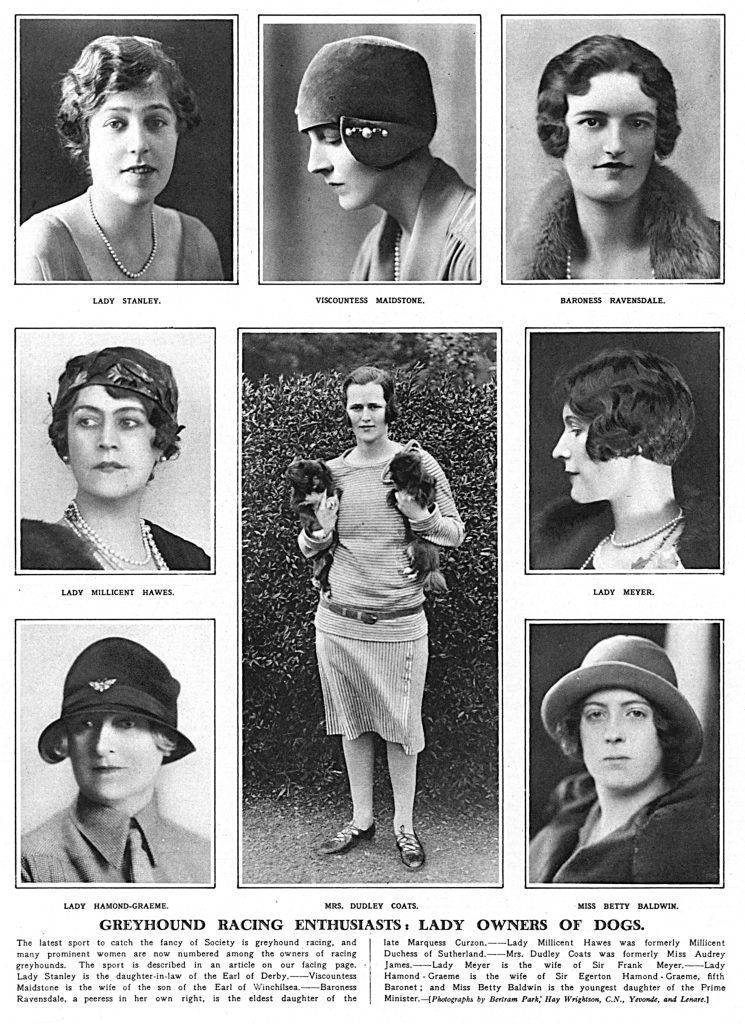
The ladies’ lounge at Wembley reflected female enthusiasm and involvement in the sport. White City also offered a luxury experience, with a viewing gallery where well-heeled spectators in evening dress could enjoy cocktails and fine dining while watching the action on the track below. Advertisements in society magazines such as The Bystander (a publication with its finger on fashionable society’s pulse), highlighted its ‘Ladies’ Night’. But interest was more than superficial. Many women were owners, breeders and trainers of greyhounds. One lady breeder, Mrs C. Clarke, who wrote a history of the sport in 1934, noted, “women have been the keenest supporters of track racing from its commencement: they form a large proportion of the huge crowds seen at various tracks.” The Bystander, ruminating on the sudden success of greyhound racing in 1927, commented on its cross-class appeal, (“what we used to look upon vaguely as the miners’ chief interest in life, seems to have passed into the hands of duchesses”) and reeled off a list of socialites who had greyhounds in training: Miss Daphne Vivian, Alison and Margaret Hore-Ruthven (twin daughters of Lord Ruthven), Lady Alastair Innes-Kerr, the Duchess of Newcastle, Lady Blandford and the Duchess of Sutherland. Lady Malcolm and the novelist Barbara Cartland were two more high profile owners. Mick the Miller, the most celebrated greyhound champion was owned by Mrs Arundel Kempton, whose husband had bought her the dog as a gift for an enormous sum – 2,000 guineas in 1929 (well over £90,000 today). The investment proved a canny one as the dog continued his winning streak before pursuing a successful film career.
Again in The Bystander, ‘The Social Side of Greyhound Racing’ told readers in 1933 that it was, “quite the thing” for lady greyhound owners to invite their friends to dinner when their dogs were racing, and in order to secure their custom, stadium managers hired chefs and maître d’ with impressive credentials. Wimbledon stadium was renowned for its French cuisine and dance band while at White City, Paul Adam, formerly of the Midland Hotel, Manchester, presided over the smooth-running of its restaurant. A-list celebrities were frequent visitors. Tallulah Bankhead, opened Wimbledon stadium in May 1928, christening the mechanical hare with a bottle of champagne, while aviator Amy Johnson (not to be confused with a successful greyhound of the same name during this period) was the special guest at the opening of Walthamstow by bookmaker William Chandler in April 1933. Popular stars of stage and radio such as Jack Buchanan and Gracie Fields, were invited to present trophies, and at White City, The King of Spain’s Cup was named in honour of Alfonso XIII, a frequent visitor to Britain, and to the dog track.
Not everyone approved of dog racing. Sir Arthur Elvin (1899-1957), the entrepreneur who purchased Wembley for a very reasonable £150,000 faced fierce opposition to his applications for a licence. The Bishop of Willesden vehemently declared, “Gambling is one of the mistakes of life. It leads to a great amount of emotion, and that is the very occasion, when intoxicating liquor should not be served.” We can only imagine the bishop’s reaction when Elvin’s application was eventually successful and among the ten bars at Wembley was one claimed by the management to be the longest in the world. Greyhound racing continued to face prejudice and discrimination over the years, from the anti-gambling lobby and Labour governments intent on protecting the working classes from themselves, although the redoubtable Liverpudlian M.P. Bessie Braddock, observed cynically, “it is always an attempt to get at something the working man does.”
Despite these grumblings of disapproval, and a period of enforced closure when the harsh winter of 1947 caused a fuel crisis, greyhound racing flourished. While upper class interest in the sport had begun to dwindle by the late 1930s, turnstile takings increased exponentially through the next two decades. In the 1940s, there were 21 tracks within a 25-mile radius of London alone. In the interests of national morale, greyhound racing continued throughout the war, although on a lesser scale. Still 60,000 attended the White City Derby in 1945 and in the immediate post-war years, the equivalent of £2.12 billion was the combined turnover of the totalisators at Wembley, White City and Harringay. The continuation of the dogs was due in no small part to the substantial contribution it made in taxes to government coffers.
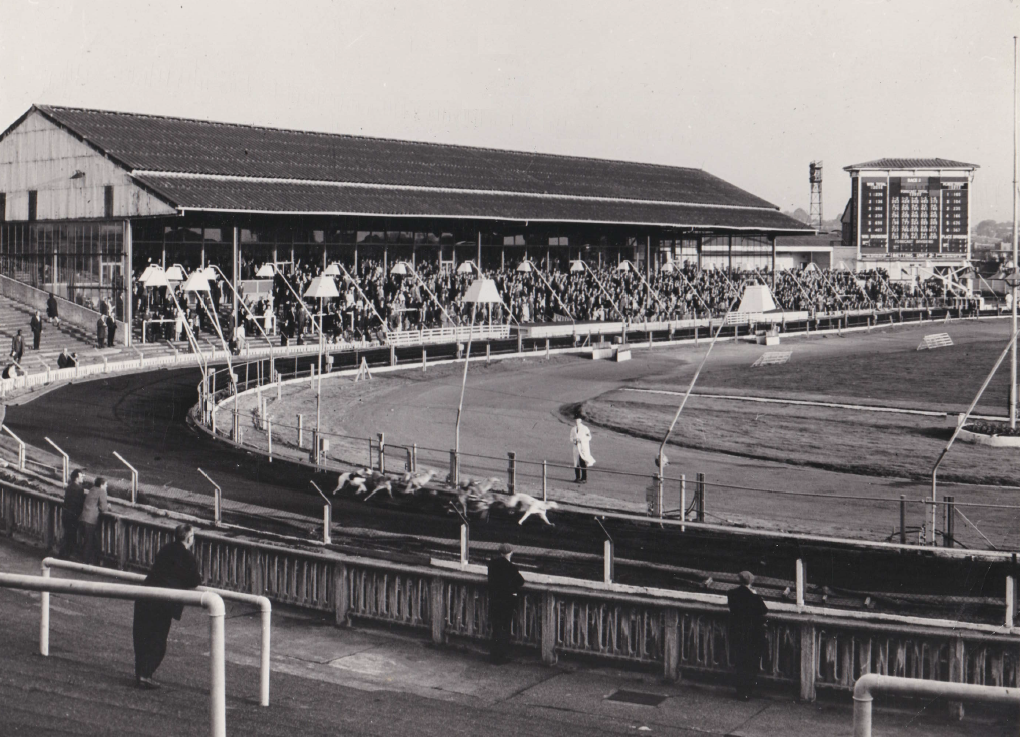
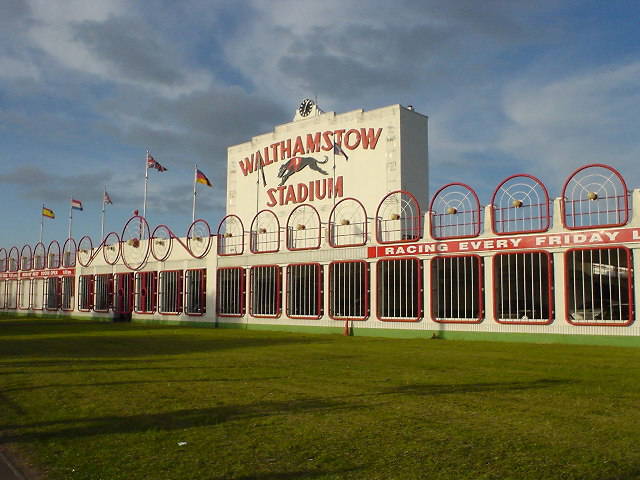
Belle Vue, the cradle of greyhound racing, lasted longer. Proud of its heritage, a major refurbishment in the 1970s included a stand named Mistley, the name of the winning dog of the first race from Belle Vue’s inaugural meeting. But after a change of ownership, and increasing pressure from greyhound welfare groups, the stadium finally fell to the wrecking ball in 2021, a fate accelerated by the Covid pandemic. A housing estate now stands where once upon a time tens of thousands of Mancunians came for a night at the dogs.
Lucinda Gosling is a freelance historian, and works at the Mary Evans Picture Library. The Library was founded in 1964 and its collections include a wide variety of images created for people to enjoy over the centuries. This includes those originally published in books, on posters, in advertisements, or as prints. There are more greyhound racing images here or you can browse the whole online collection at this link: https://www.maryevans.com