
by Sonia Grant
If we think of the south coast and Art Deco, our minds automatically go to the iconic Saltdean Lido. But just along the coast are three much smaller examples of Art Deco architecture which whilst not as imposing are also noteworthy.
Unlike other Art Deco buildings or structures in Brighton and Hove which have been covered with shop signs or had their ground floor frontages obscured, these modernist shelters are passed by hundreds of people on a daily basis and are therefore, arguably, have more of an impact on the built environment.
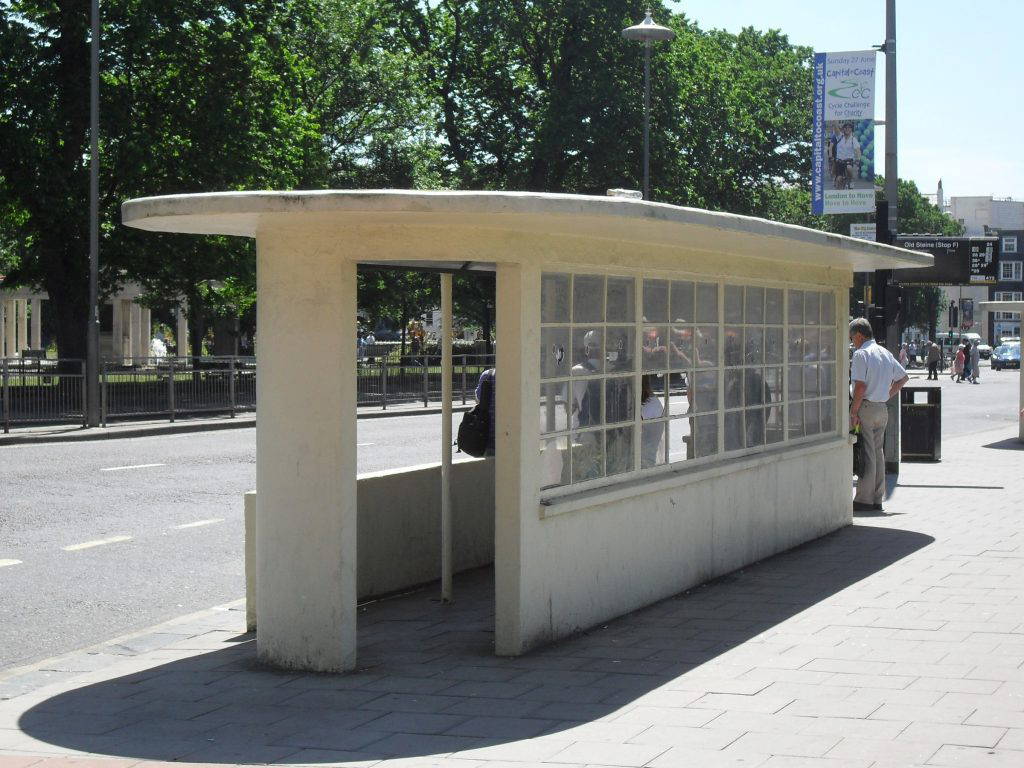
Sadly, these bus shelters now have a neglected appearance: their rust encrusted window frames and generally woeful state of disrepair, means they are viewed as “eyesores”. They are, however, part of the final phase of Brighton and Hove Council’s ambitious £13 million Valley Gardens Project, a major construction project which is redeveloping the central parks which form the “spine” of central Brighton.
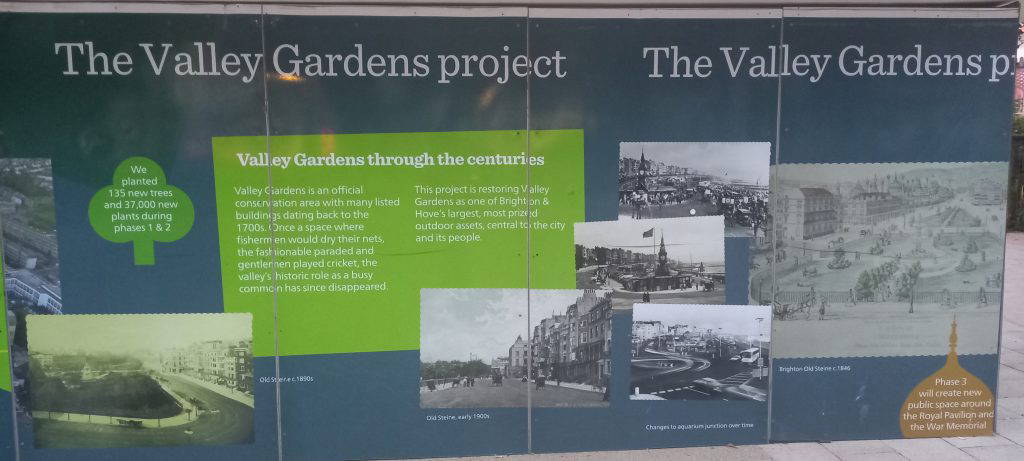
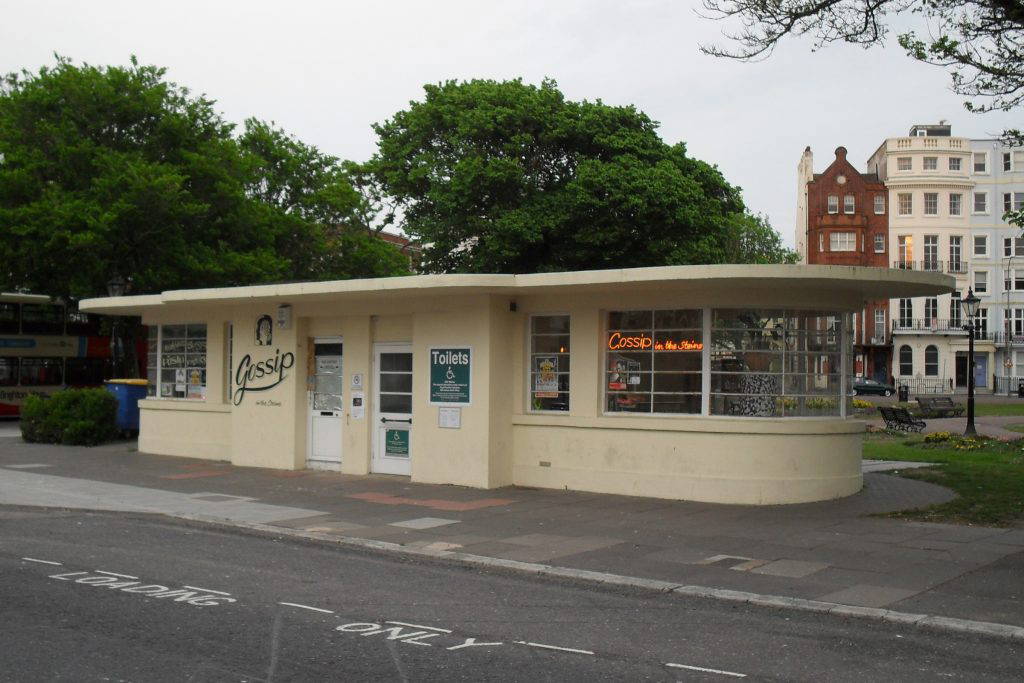
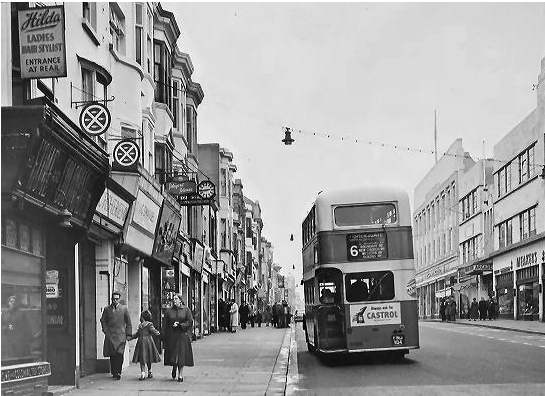
For decades the shelters were misidentified by English Heritage as circa 1926 and designed by the then Borough Engineer, David Edwards. In fact the shelters were actually built in 1949, by his successor, DJ Howe, who took as his inspiration the 1936 tram shelters which were in the nearby Steine Gardens (see below)
Although now referred to as being “art deco-style”, the shelters were granted Grade II listing on 21 October 1993 by Historic England, being described as in “International Style”. However, aficionados insist that they also display distinctive Streamline Moderne design features and they believed that the Council should make a commitment that the existing structure(s) be maintained as their Grade II listed status warranted. This means using “like-for-like” materials which are sympathetic to the original structures. For instance, if glass windows were broken, they should not, as had become the norm, be replaced with uPVC.
In 2018 and 2022 proposals for the Valley Gardens Project were put out for public consultation. Readers of the local newspaper, The Argus, were vociferous: “They need to be scrubbed clean once a week, which is what would happen if they were in Italy,” wrote one. “The condition of them is disgraceful. I know they are part of our history, but the windows are constantly being broken. Every night someone uses them as a toilet,” lamented another. Furthermore, there seemed to be a general consensus that, “The plastic is often shattered with an airgun or sharp object. Then you have them melted, as people put flames to the seats. Sadly, it’s people, not property, which are the problem.”
Indeed, for decades, the shelters have been plagued by a perennial “problem”: graffiti. ‘Perpetrators typically target building surfaces indiscriminately,’ says Catherine Woolfitt, buildings archaeologist and conservator at West Dean College. It seems though that these seemingly wanton acts of vandalism are far from “indiscriminate” and posit that they are “targeted”. It’s notable that the Brunswick Conservation area, less than thirty-minutes’ walk away and painted in a similar “Nash cream” colour, has never routinely been subjected to graffiti. The perpetrators seem to select the shelters as they present a “blank canvas”, which is audacious considering that they are situated in a relatively busy thoroughfare.
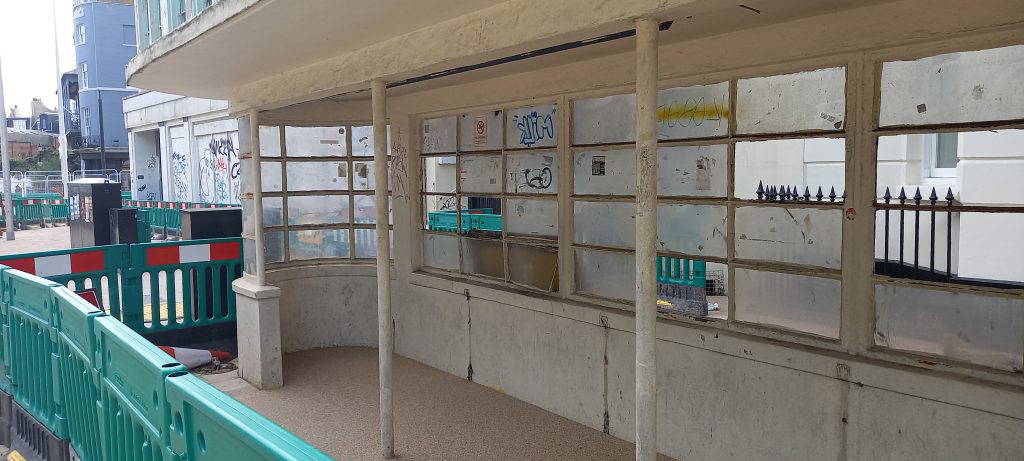
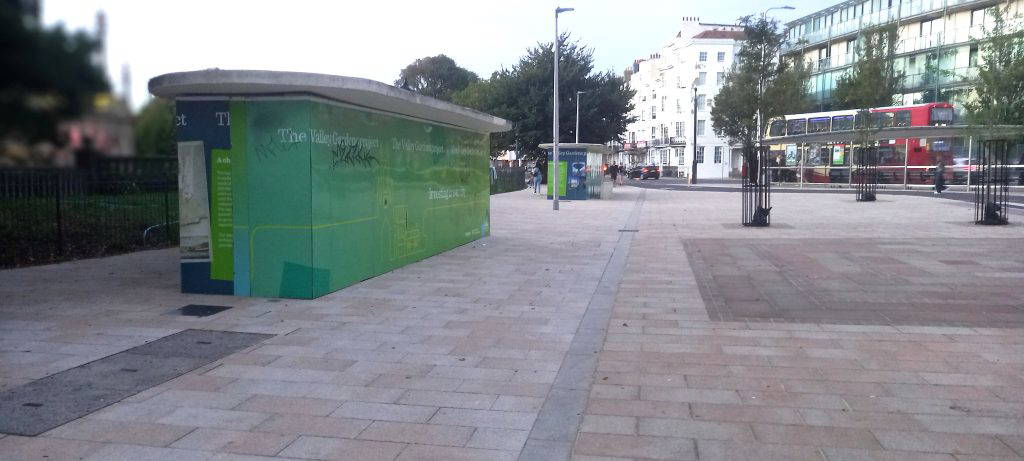
Subject to planning regulations, the shelters are being repurposed for flexible uses: Shelter 1 (Café and Kiosk, with an information kiosk and an accessible public toilet); and Shelter 2 & 3 (Flexible Spaces, with proposals including pop-up art galleries, bike repair hubs, or e-bike charging stations). There is consolation, as far as heritage and conservation enthusiasts are concerned: “The proposal will retain the existing structure.” A cautionary note was, however, struck by the Council when it confirmed that it was necessary that the proposed refurbishments include “discreet” shutters to protect the shelters from vandalism; it conceded that there remained a “tendency for graffiti to proliferate”.
Catherine Woolfit makes a case for “social and educational engagement aimed at preventing further incidents”. This concept is crucial because, despite the Council declaring that it is “committed to removing offensive graffiti within 24 hours of it being reported. For non-offensive graffiti our team operates on a monthly schedule.” In fact, as soon as graffiti is removed, more reappears within no time at all.
Ironically, in 2026, empirical evidence underscored the importance and correlation of public spaces and well-being. According to a report, Connecting People and Place: Valuing the Felt Experiences of Historic Places, published jointly by Historic England and the University of Glasgow, 70% of young adults (25-34 year-olds) concluded that historic buildings (of which the three bus shelters are included as part of the Royal Pavilion Estate) boost well-being, comparable to the impact of parks and green spaces that protect cultural heritage.
The Council had previously provided designated areas – stretches of temporary plywood boards – for so-called graffiti “artists” who, admittedly, conducted themselves in a responsible fashion. It will be more challenging, however, to engage with those for whom vandalism is an irresistible pastime and who show indications of a determination to continue their “war of attrition” and blight the multipurpose spaces we all use.
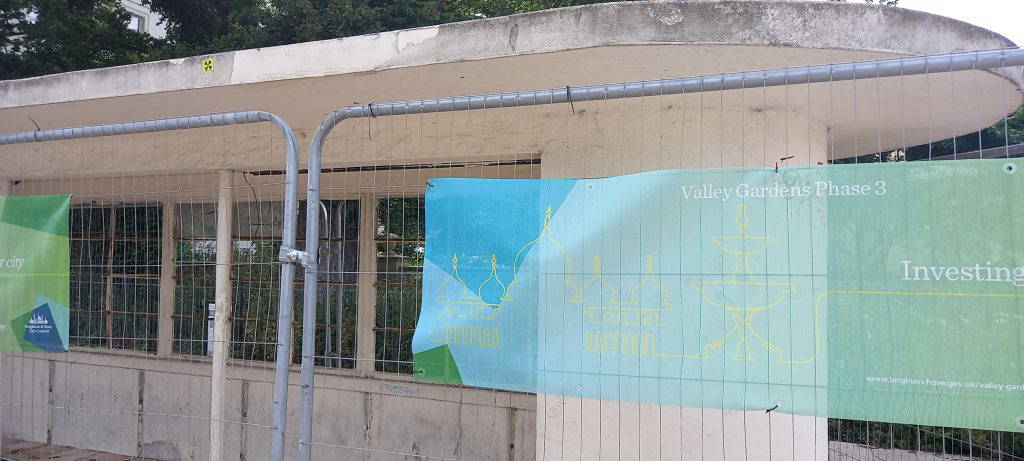
Currently, the shelters remain protected by hoardings – themselves the subjects of graffiti – and when the new occupants have been confirmed, the shelters will be fitted with “discreet” shutters to protect them, once again, from vandalism. Uncertainty, however, surrounds their final unveilings. For the time being, the Council has refrained from publishing “the early visualisations of the bus shelters” as the new businesses for the premises have yet to be finalised.
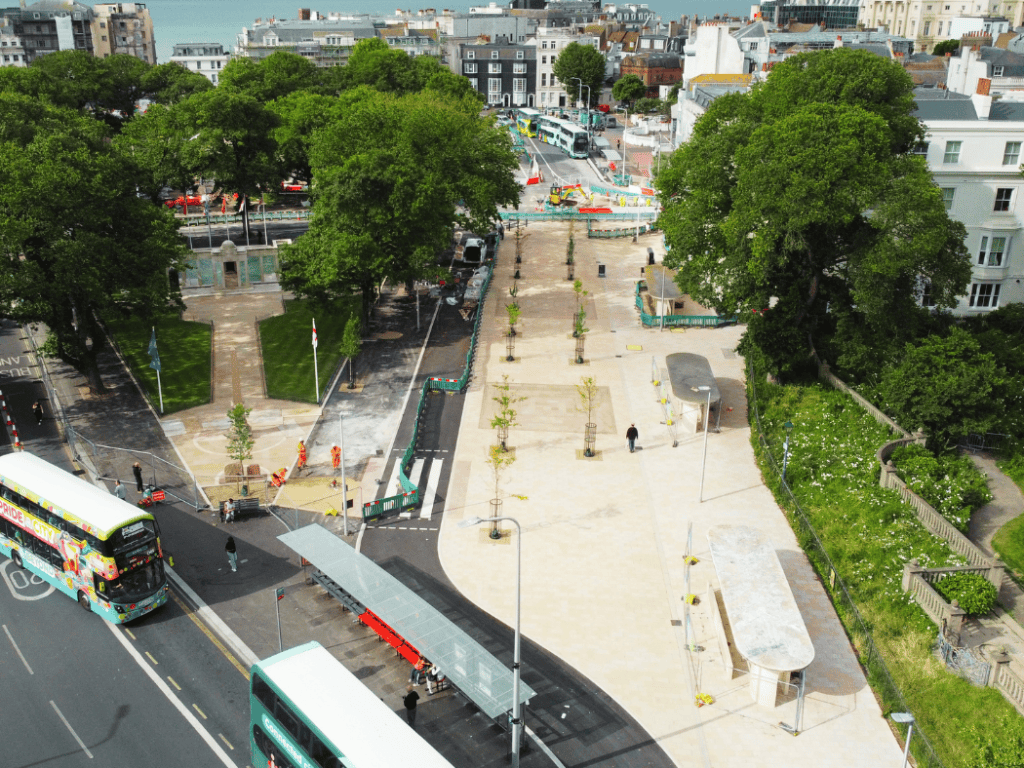
As the Royal Pavilion Estate’s streetscape nears completion – with restoration of original Victorian street lighting, a new cycle path, and landscaping, including saplings – the area has undergone a transformation. Retention of the three bus shelters, on account of their architectural significance, has enabled Brighton and Hove Council to redeem its past shortcomings, as well as curtailing the city’s shabby-chic tendencies, while combining modern-day transportation functionality, urban renewal, and complementing the vicinity of the Royal Pavilion. By including the Art Deco shelters the Valley Gardens Project is continuing with the vision that the city’s Borough Surveyor Philip Causton Lockwood, had in the 1850s: to create infrastructure which is simultaneously beautiful and functional.